


The Climate Center conducts academically rigorous and practically relevant research on topics at the intersection of business, markets, finance, and policy surrounding climate change, energy, and the environment, including the impacts of mispricing of climate risks and opportunities on financial markets and business strategies, how effective environmental policies can correct this mispricing, and environmental ethics. Informed by this research, we offer 10+ courses that MBA and undergraduate students can assemble into the Business, Energy, Environment and Sustainability (BEES) major or concentration, over a dozen co-curricular experiences, four Executive certificate programs, and an expanding array of industry and policy convenings. We advance Wharton’s best-in-class education of current and future leaders, equipping them with the tools, skills, and perspectives needed to navigate a world in which climate risks and opportunities are increasingly material.
Featured Research

In Firm Ownership and Pollution, Wharton’s Arthur van Benthem and co-authors demonstrate how much of what leads a firm to “internalize its externalities” in pollution depends on its ownership distribution among small and large shareholders. Using a theoretical micro foundation, van Benthem and his colleagues contend that small shareholders, compared to larger ones, would want the firm to spend more on avoiding pollution because they suffer less in terms of loss in profit for the same environmental benefit that they all more or less equally enjoy as citizens. Their theoretical model offers a new way to think about the link between corporate governance and environmental impact. Read more in Knowledge at Wharton.
In Climate extremes and urbanization drive flood tipping points at the city–river interface, Wharton’s Leandro Pongeluppe and co-authors develop a street-resolving flood model that integrates LiDAR-derived terrain, bathymetric surveys, and land-use-based surface friction across Philadelphia’s watershed to reproduce Hurricane Ida’s flood. They show that soil saturation, impervious surfaces, and fragmented infrastructure amplify pluvial flooding, increasing exposure in both low- and high-income communities. Scenario simulations reveal a flood tipping point. As extreme rainfall intensifies and return periods shorten, this tipping point will be crossed more often, demanding integrated forecasting and adaptive planning in vulnerable, low-lying, rapidly urbanizing regions.


In Marketing scholarship and environmentally-sustainable retailing: a two-stage framework for greener consumption and production, Wharton’s David Reibstein and co-authors demonstrate how marketing scholarship in the retailing domain can play an important role in advancing environmentally sustainable consumption and production. They synthesize prior research across marketing and related fields and introduce a novel two-stage framework that examines sustainability interventions through the lens of retail actor interactions. Their framework informs marketing scholars by highlighting research gaps, by revealing barriers that limit the effectiveness of current interventions, and by pointing to opportunities to adapt successful approaches across actors to better support sustainability goals.
In The Efficiency of Dynamic Electricity Prices, Wharton’s Arthur van Benthem and co-authors use statistical analysis and a machine-learning exercise to model different electricity-pricing scenarios. Electricity is “mispriced,” as the marginal cost of electricity fluctuates hour-by-hour, yet retail customers typically face flat prices. The study has three main findings: First, time-of-use rates and critical-peak pricing — the two commonly used time-varying rate plans — each correct about 10% of mispricing. Second, complex time-of-use rate structures based on historical prices often backfire. Third, real-time pricing with price ceilings can capture most potential efficiency gains, and increased automation will help make this possible. This study demonstrates how consumers can save money and the grid can avoid unnecessary peak-load power plants.


In An evaluation of protected area policies in the EU, Wharton’s Arthur van Benthem and co-authors Tristan Grupp (World Resources Institute), Prakash Mishra (Caltech) and Mathias Reynaert (Toulouse School of Economics) conduct a comprehensive analysis using remote-sensing data dating back to 1985 to find whether the land protection efforts of EU member states have contributed to the continent’s greening. They show that across the entirety of the EU, protected areas appear to have greened no differently than similar land which was never protected. Their evidence suggests that while the EU’s plan appears ambitious, more rigorous efforts are needed to protect nature where it faces the most significant threats.
In Transparency and Real Effects of Climate Stress Tests for Banks, Wharton’s Luzi Hail and co-authors Jannis Bischof, Vincent Giese, and Gerrit von Zedlitz examine whether microprudential climate stress tests affect banks’ reporting choice, loan portfolios, and environmental performance. Focusing on the 230 largest European banks from 2017 to 2022, they find that participants in supervisory climate stress tests significantly increase their transparency, mainly if they have previously shown commitment to climate issues, face outside ESG pressure, or are more exposed to climate risks. Their results suggest that, while on average they find no effects, supervisory stress tests can act as change agents and elicit feedback effects for banks facing strong climate-related incentives, impose funding and investment constraints on high-risk borrowers, but also trigger (unintended) substitution to less committed and less tightly regulated banks.


In Who Labels and What’s Priced? Evidence from Third-Party ESG Assessments in the Municipal Bond Market, Wharton’s Daniel Garrett and co-authors Brian Gibbons (University of Chicago) and Mahdi Shahrabi (University of Pennsylvania) study the supply and pricing dynamics for ESG labels using a novel and unexpected third-party assessment of environmental, social, and governance (ESG) characteristics for over $1 trillion in municipal bonds. They show that most eligible bonds are issued without ESG labels and that local beliefs and issuance terms discourage labeling. Their evidence highlights the general relevance of ESG information in assessing credit risk and a mismatch between its supply and investor demand.
In Carbon Burden, Wharton’s Luke Taylor and Robert Stambaugh, and University of Chicago’s Lubos Pastor quantify the U.S. corporate sector’s carbon externality by computing the sector’s “carbon burden”—the present value of social costs of its future carbon emissions. They find that the 30 largest emitters account for all the decarbonization of U.S. corporations predicted by 2050, and that predicted emission reductions, and even firms’ targets, fall short of the Paris Agreement.


In The Spillover Effects of Environmental Transparency and Enforcement Regulation: Evidence From Commodity Trading Firms, Wharton’s Sandra G. Schafhäutle evaluates examines the effects of environmental transparency and enforcement regulation on the sourcing patterns of commodity trading firms (i.e., firms that source commodities from producers and distribute them downstream). She finds that trading firms do not reallocate their sourcing from regulated to unregulated locations, but the positive spillover effect in unregulated locations suggests trading firms respond to upstream production shocks and enhance the sustainability of their firm-wide sourcing activities.
In Governance & Governments: The Effects of Shareholder Engagement and Climate Laws on Firm CO2 Emissions, Wharton’s Witold Henisz and Kenneth Chung, and Northeastern’s Kevin Chuah examine the combined effects of shareholder engagement-supported by the Climate Action 100+ (CA100+) initiative-and governmental climate regulation on firms’ carbon emissions intensity. Their study highlights the reinforcing effects of shareholder engagement and climate laws for reducing corporate emissions, and demonstrates that engagement can have a wider impact as information spreads to other companies in the wider ecosystem through board networks.
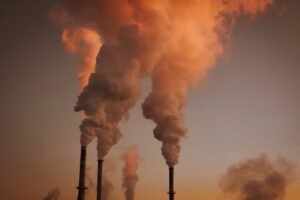

In the following papers, Wharton’s Francis X. Diebold and his co-authors evaluate forecasts of Arctic sea ice based on cumulative carbon dioxide emissions. Their findings suggest that for a given future emissions path, an ice-free Arctic is likely to occur much earlier than global climate models project:
Climate Models Underestimate the Sensitivity of Arctic Sea Ice to Carbon Emissions; Assessing and Comparing Fixed-Target Forecasts of Arctic Sea Ice: Glide Charts for Feature-Engineered Linear Regression and Machine Learning Models; When Will Arctic Sea Ice Disappear? Projections of Area, Extent, Thickness, and Volume; Probability Assessments of an Ice-Free Arctic: Comparing Statistical and Climate Model Projections; A Benchmark Model for Fixed-Target Arctic Sea Ice Forecasting
In Commodity Supply Chains and Local Environmental Regulation, Wharton’s Sandra G. Schafhäutle examines the effects of local environmental regulation on the sourcing patterns of commodity trading firms (i.e., firms that source commodities from upstream producers and distribute these commodities further downstream). She concludes that upstream supply chain shocks can have transmission effects on agents further down in supply chains, evidenced by global trading firms adopting firm-wide sourcing strategies that can shape the efficacy of local environmental regulation.

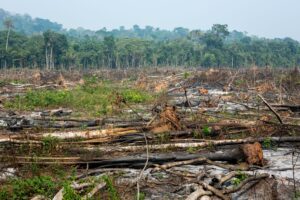
In Heroes or Villains? Agribusiness Leaders in the Amazon Region, Wharton’s Leandro S. Pongeluppe and co-authors Gustavo Simoes Cordeiro, Paulo Roberto Arvate, and Joana Sabrina Pereira Story examine the effects of leaders’ occupational background in agribusiness on economic development and environmental preservation. Their findings suggest that agribusiness leaders are more effective than their non-agribusiness counterparts in promoting the creation of new businesses in their municipalities.
In There Is No Planet B: Aligning Stakeholder Interests to Preserve the Amazon Rainforest, Wharton’s Leandro S. Pongeluppe and Anita M. McGahan investigate the possibility that firms may avoid the tragedy of the commons by aligning the interests of critical proximate stakeholders in ways that governments cannot accomplish, by analyzing Amazon rainforest preservation by Natura, a Brazilian cosmetics company. The results indicate that Natura internalized environmental externalities by linking ecologically conscious consumers with rural Amazonian communities.


In When is it Permissible to Impose and Offset Risks?: A Response to Barry and Cullity, Wharton’s Brian Berkey highlights some reasons to be skeptical about Christian Barry and Garrett Cullity’s argument that there is a morally important distinction between offsetting by “sequestering” and offsetting by “forestalling.” Berkey suggests an alternative account of the conditions, in which offsetting can make a riskimposing action permissible, and notes a significant implication of his argument for the ethics of greenhouse gas offsetting.
In Anti-Woke Capitalism, the First Amendment, and the Decline of Libertarianism, Wharton’s Sarah E. Light and Amanda Shanor trace how so-called “anti-woke capitalism” laws represent a fundamental shift in the conservative legal movement the United States away from laissez-faire law and policy. They offer the first in-depth constitutional analysis of these so-called “anti-woke capitalism” laws under the First Amendment, and articulate the questions and constitutional values that should guide analyses of these laws and others like them that regulate social practices at the intersection of political and economic life.


In The Impact of Impact Investing, Wharton’s Jules H. van Binsbergen and co-author Jonathan Berk demonstrate that the impact on the cost of capital that results from a divestiture strategy is too small to meaningfully affect real investment decisions, empirically corroborating these small estimates by studying firm changes in ESG status. Their results suggest that to have impact, instead of divesting, socially conscious investors should invest and exercise their rights of control to change corporate policy.
In The Future of Emissions, Wharton’s Jules H. van Binsbergen and co-author Andreas Brøgger argue for the introduction of firm-level emission futures contracts as a novel way of assessing the real impact of ESG initiatives. They establish that backward-looking subjective ratings are limited by their failure to capture future reductions in emissions. As a result, investors may inadvertently allocate their money to firms that pollute more, not less. They discuss several applications of their new measure, including executive pay and investment management.


In Study: Green Energy Transition May Leave Some Workers Behind, Wharton’s R. Jisung Park and co-authors E. Mark Curtis and Layla O’Kane explore how workers may be affected by a shrinking labor market in carbon-intensive, or “dirty,” industries due to climate mitigation policies. Their analysis of data finds the rate of workers transitioning from dirty to green jobs rapidly increasing, as well as the number of available green jobs, including those that offer similar opportunities for longer-term employment, to be on the rise.
Last fall, Perry World House and the Wharton Climate Center brought together experts from policy and academia for our Global Climate Finance Workshop. The workshop report explores financial policy solutions to the climate crisis, the role the private sector should play, and how existing systems can be changed to better support climate adaptation and mitigation.


In Gas, Guns, and Governments: Financial Costs of Anti-ESG Policies, Wharton’s Daniel Garrett and co-author Ivan Ivanov of the Federal Reserve demonstrate that government regulation limiting the adoption of ESG policies distorts financial market outcomes. Their analysis of a 2021 Texas law prohibiting municipalities from contracting with banks adopting ESG policies suggests that Texas entities will pay an additional $303-$532 million in interest on the $32 billion in borrowing during the first eight months following the laws’ adoption.
In the paper Designing More Cost-Effective Trading Markets for Renewable Energy, Arthur van Benthem and co-authors study the design of state-specific renewable energy portfolios standards. The study finds that combining separate state markets into a wider regional market and ramping up interim targets progressively over time can reduce the cost of meeting green energy targets substantially, thereby avoiding escalating costs and preserving the political feasibility of renewable energy standards.


The world is under pressure to deliver on the Paris Agreement and individual countries are enacting policies such as phasing out coal, supporting renewable energy, and taxing aviation. In Overlapping Climate Policies, Arthur van Benthem and co-authors, Grischa Perino and Robert Ritz, show that when such policies overlap with a wider carbon-pricing scheme like the EU ETS, the climate effect of renewable energy subsidies is amplified, but fossil fuel bans and taxes can backfire.
Gas prices continue to climb, surpassing $6/gallon in some U.S. states. For today’s teenage drivers, the reverberations of these price shocks will be felt for years to come. According to a new study, Formative Experiences and the Price of Gasoline, by Chris Severen, a senior economist at the Federal Reserve Bank of Philadelphia, and Arthur van Benthem, Wharton professor of business economics and public policy, oil crises during your formative years shape driving behavior later in life.

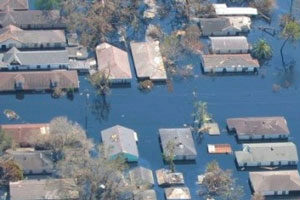
Benjamin Keys and Philip Mulder assess the impact of climate change on the built environment, both residential and commercial real estate, and the various holders of risk in these markets (investors, insurers, lenders). In a recent paper, Neglected No More: Housing Markets, Mortgage Lending, and Sea Level Rise, they find that home sales volumes in communities not exposed to sea level rise declined 16-20% relative to less exposed areas, and eventually real estate prices in exposed areas decreased.
Recent explosive growth in environmental and climate-related marketing claims by business firms has raised concerns about whether such claims are real or constitute greenwashing. Sarah E. Light’s research examines the role of government regulators, including financial regulators like the Securities and Exchange Commission, in addressing concerns about greenwashing. In Greenwashing and the First Amendment, Light and co-author Amanda Shanor demonstrate that disclosure requirements, including the SEC’s recent proposed rule requiring disclosure of climate-related risk and emissions information, are consistent with First Amendment doctrines surrounding commercial speech.


In Dissecting Green Returns, Wharton’s Robert Stambaugh and Luke Taylor and their co-author Lubos Pastor show empirically that green assets delivered high returns in recent years. This performance reflects unexpectedly substantial increases in concerns about climate change, not high expected returns. They estimate lower expected returns on environmentally friendly assets, including German green bonds and U.S. stocks.
Lubos Pastor, Robert Stambaugh, and Luke Taylor show that greener assets have lower expected returns due to investors’ green preferences and green assets’ ability to hedge climate risk. Green assets can nevertheless outperform when climate concerns increase unexpectedly. Their paper Sustainable Investing in Equilibrium recently won the 2021 Fama-DFA Prize for best paper on capital markets and asset pricing at the Journal of Financial Economics.


Rapid decreases in the amount of Arctic sea ice have far-reaching impacts on the global environment and economy. In their paper Probability Assessments of an Ice-Free Arctic: Comparing Statistical and Climate Model Projections, Wharton’s Francis Diebold and Glenn Rudebusch from the Federal Reserve Bank of San Francisco provide statistical forecasts of Arctic sea ice extent for the 21st century and a probability assessment of the timing of an ice-free Arctic, with results indicating an almost 60 percent chance of an ice-free Arctic Ocean during the 2030s.
With the rampant climate emergency, Wharton’s Eric Orts and Brain Berkey urge businesses, especially carbon majors, to abide by a climate imperative that calls for operating responsibly in a way that limits GHG emissions to a level that is compatible with the recommended global emission limits. This requires revising the traditional profit-maximization approach, which can frequently conflict with the goal of emission reductions even with policy corrections. Their paper, The Climate Imperative for Business, recommends four constructive strategies for businesses to effectively embrace the climate imperative.


Artificial intelligence (AI) has been increasingly applied in supporting climate change projections, but limited work has leveraged AI to address climate change adaptation. In Artificial Intelligence for Climate Change Adaptation, Wharton’s Hamsa Bastani and coauthors So-Min Cheong from the University of Kansas and Kris Sankaran from the University of Wisconsin-Madison identify the gap in AI applications, highlight the value of AI in supporting adaptation choices and implementation, and illustrate how AI can unlock valuable information in scarce-data settings and enable better decision making and tailor adaptation measures.
In a forthcoming article in the American Economic Review, Wharton’s Susanna Berkouwer and co-author Joshua Dean from the University of Chicago investigate the adoption of energy-efficient technologies by low-income households in Kenya. They find that improved cookstoves reduce charcoal usage by 39%, which corresponds to 3.5 tons of CO2e per year (valued at $295 over the two-year lifetime of the stove when using a social cost of carbon of $42) in addition to $237 in private financial savings from reduced fuel expenditures. They identify credit constraints as a major barrier to adoption: demand doubles when participants are offered a 3-month loan to adopt the stove.


For Wharton’s Steven O. Kimbrough, the University of Pennsylvania’s Robin Clark, and co-author Christine Chou, two important research questions arose from the 2010 U.S. Securities and Exchange Commission (SEC) Advisory on climate change reporting: (1) How does the discussion of climate change in SEC filings change after the Advisory? and (2) What are firms talking about when they talk about climate change? In What do firms say in reporting on impacts of climate change? An approach to monitoring ESG actions and environmental policy, they find that firms with comparatively larger transition risks tend to discuss climate change comparatively more, focusing on regulation-related topics. Meanwhile, firms exposed to the physical risks of climate change tend to discuss climate change somewhat less, focusing on meteorological topics.
To mitigate environmental and social harm, policy-makers often provide incentives or impose sanctions to discourage harmful behavior. In Are Bans Effective under Limited Monitoring? Evidence from High Seas Management, Wharton’s Hamsa Bastani and co-author Joann F. de Zegher from the Massachusetts Institute of Technology (MIT) find that a ban on seafood transshipments on the high seas reduces the yearly growth in transshipment rates by an estimated 58% despite significant monitoring challenges, and does not cause appreciable strategic behavior. A difference-in-differences analysis of landing prices suggests that this reduction comes at an estimated cost of 3% higher raw material prices.

Featured publications
Severen, C., & van Benthem, A.A. Formative Experiences and the Price of Gasoline. Forthcoming in the American Economic Journal: Applied Economics.
Berkey, B. Prospects for an Animal-Friendly Business Ethics. Forthcoming in Animals and Business Ethics (Springer).
Berkouwer, S.B., Biscaye, P.E., Puller, S., & Wolfram, C.D. (2022). Disbursing emergency relief through utilities: Evidence from Ghana. Journal of Development Economics, 102826.
Bhutta, N., & Keys, B. (2022). “Moral Hazard during the Housing Boom: Evidence from Private Mortgage Insurance.” Review of Financial Studies, 35(2): 771–813.
Berkouwer, S., Wolfram, C., Miguel, E., & Hsu, E. “What does donor conditionality do? Causal evidence from Kenyan electrification.”
McGlinch, J., & Henisz, W. “Reexamining the Win-Win: Relational Capital, Stakeholder Issue Salience, and the Contingent Benefits of Value Based Environmental, Social and Governance (ESG) Strategies.” (Under Review)
Perino, G., Ritz, R.A., & van Benthem, A.A. “Cancelling Carbon in Cap-and-Trade Systems.” Latest draft: February 2022.
Abito J.M., Flores-Golfin, F., van Benthem, A.A. & Vasey, G. “Designing More Cost-Effective Trading Markets for Renewable Energy.” Latest draft: February 2022.
Berkey, B., & Orts, E.W. (2021). The Climate Imperative for Business. California Management Review (Insights/Frontier).
Abito, J.M, Knittel, C.R., Metaxoglou, K., & Trindade, A, “The Role of Output Reallocation and Investment in Coordinating Environmental Markets.” Revise & Resubmit at International Journal of Industrial Organization.
Berkouwer, S., & Dean, J.T. “Credit, attention, and externalities in the adoption of energy efficient technologies by low-income households.” Revise & Resubmit at the American Economic Review.
Perino, G., Ritz, R.A.& van Benthem, A.A. “Understanding Overlapping Policies: Internal Carbon Leakage and the Punctured Waterbed.” Latest draft: December 2021.
Jacobsen, M.R., Sallee, J.M., Shapiro J.S., & van Benthem, A.A. “Regulating Untaxable Externalities: Are Vehicle Air Pollution Standards Effective and Efficient?” Latest draft: December 2021.
Berkouwer, S., Adkins, J., Hsu, E., Klugman, N., Streff, A., & Wall, A. (2021). What’s reliability without voltage quality? Energy for Growth Hub. November 29.
van Benthem, A.A., Crooks, E., Giglio, S., Schwob, E., & Stroebel, J.C. “Climate Risks, Financial Markets, and the Energy Sector.” Latest draft: October 2021.
Han, J.S., Houde, J.F., van Benthem, A.A. & Abito, J.M. “Agency Frictions and Procurement: New Evidence from U.S. Electricity Restructuring.” Latest draft: August 2021.
Light, S.E., & Skinner, C.P. (2021). Banks and Climate Governance. 121 Columbia Law Review 1895.
Gillingham, K.T., Houde, S., & van Benthem, A.A. (2021). Consumer myopia in vehicle purchases: evidence from a natural experiment. American Economic Journal: Economic Policy, 13(3), 207-38.
Han, J.S., Houde, J.F., van Benthem, A.A. & Abito, J.M. (2021). When Does Regulation Distort Costs? Lessons from Fuel Procurement in US Electricity Generation: Comment. American Economic Review, 111(4): 1356-1372.
MacDuffie, J.P., & Light. S.E. (2021). EV Turning Point: Momentum Builds for U.S. Electric Vehicle Transition. Yale Environment 360.
Light, S.E. (2021). National Parks, Incorporated. University of Pennsylvania Law Review, 169, Rev. 33.
Abito, J.M. (2020). Measuring the Welfare Gains from Optimal Incentive Regulation. Review of Economic Studies, 87(5): 2019–2048,
Engström, G., Gars, J., Jaakkola, N., Lindahl, T., Spiro, D., & van Benthem, A.A. (2020). What Policies Address Both the Coronavirus Crisis and the Climate Crisis? Environmental and Resource Economics 76(4): 789-810.
Wiley, H.J.P., & Kousky, C. (2020). Speeding Up Post-Disaster Housing Buyouts. Solutions. 11(3). September.
Bento, A.M., Jacobsen, M.R., Knittel, C.R., & van Benthem, A.A. (2020). Estimating the Costs and Benefits of Fuel Economy Standards. In: M.J. Kotchen, J.H. Stock, and C.D. Wolfram (eds.), Environmental and Energy Policy and the Economy 1.
Berkouwer, S.B. (2020). Electric Heating and the Effects of Temperature on Household Electricity Consumption in South Africa. The Energy Journal, 41:04
Schneeman, B.O., Lamberton, C., et al. (2020). A National Strategy to Reduce Food Waste at the Consumer Level. National Academies of Sciences, Engineering, and Medicine. Washington, DC: The National Academies Press. https://doi.org/10.17226/25876.
Jacobsen, M.R., Knittel, C.R., Sallee J.M., & van Benthem, A.A. (2020). The Use of Regression Statistics to Analyze Imperfect Pricing Policies. Journal of Political Economy 128(5).
Kunreuther, H. & Slovic, P. (2020). What the Coronavirus Curve Teaches Us About Climate Change. Politico Magazine. March.
A Brief History
Formerly known as The Wharton Risk Management and Decision Processes Center, the Climate Center brings more than 37 years of academic rigor and research, ranging from climate change, to energy markets, to disaster risk financing and reduction strategies. The Climate Center joined the Impact, Value, and Sustainable Business Initiative (formerly ESG Initiative) on July 1, 2022.